The world is moving away from single-use plastic, and for good reason! Traditional plastic items can take up to 1,000 years to decompose, polluting our oceans and filling up landfills.
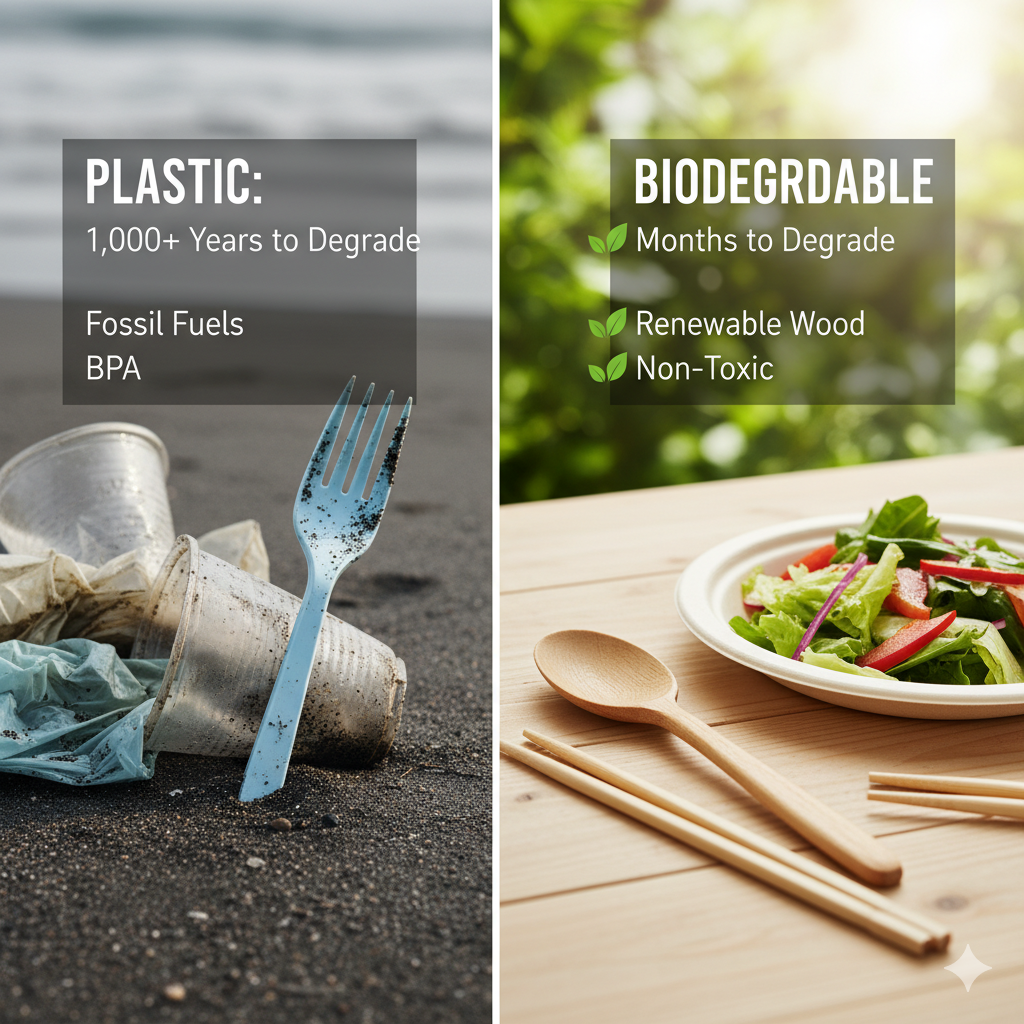
Switching to biodegradable alternatives is a simple but powerful action. It reduces waste and helps protect our planet for future generations.
This guide will show you the best eco-friendly options available right now.
Understanding Biodegradable Materials
“Biodegradable” means a material can break down naturally by microbes like bacteria or fungi. This process leaves behind only natural substances like water, CO2, and organic matter.
Here are the most popular and effective materials for your plates, cutlery, and containers:
| Material Name | Source | Key Characteristics | Ideal Use |
| Bagasse | Sugarcane fiber residue | Highly durable, heat-resistant, microwave-safe. | Plates, bowls, clamshell containers. |
| Wood/Bamboo | Fast-growing, renewable plants | Sturdy, natural look, completely biodegradable. | Cutlery (spoons, forks, knives), coffee stirrers, chopsticks. |
| PLA (Polylactic Acid) | Fermented plant starches (e.g., cornstarch) | Clear, looks like conventional plastic. Requires industrial composting. | Cold cups, clear container lids, som |
Key Benefits of Making the Eco-Friendly Switch
Choosing plant-based disposables offers massive advantages beyond just reducing waste.
- Significant Waste Reduction
- Unlike plastic, which becomes long-lasting pollution, biodegradable items decompose quickly.
- Many compostable products break down into nutrient-rich soil within 90-180 days in a commercial composting facility.
- Lower Carbon Footprint
- Producing biodegradable items generally uses less energy than creating petroleum-based plastics.
- Using plant-based resources, such as sugarcane or corn, helps reduce reliance on finite fossil fuels.
- Health and Safety
- These alternatives are typically non-toxic and free from harmful chemicals like BPA and phthalates.
- They are safer for food use and reduce the risk of microplastics entering our food chain.
Market Facts and Growing Demand
The shift toward sustainable packaging is more than a trend—it’s a massive, growing global market.
- The global biodegradable tableware market (including plates and cutlery) was valued at around USD 7.2 billion in 2023.
- This market is projected to reach USD 16.3 billion by 2030 (Source: Statista, Allied Market Research).
- In one study, wooden cutlery showed a 73% reduction in CO2 emissions per 1,500 pieces compared to traditional plastic cutlery (Source: BioLeaderPack White Paper).
This clear market growth shows that consumers and businesses are ready for this change.
Featured Product Deep Dive: The Best Options for Your Business
To genuinely outperform competitors, you need specific, high-quality, and visually appealing products.
1. Biodegradable Cutlery (Spoons, Forks, Knives, Sticks)
- Material Spotlight:Birch Wood & Bamboo
- These materials are very durable and do not warp easily.
- They are smooth, lightweight, and offer a premium, natural feel to customers.
2. Biodegradable Plates and Bowls
- Material Spotlight:Sugarcane Bagasse
- Bagasse plates are incredibly sturdy and can handle hot, wet, or oily foods without leaking.
- They are naturally white or beige and look much more appealing than Styrofoam or thin plastic.
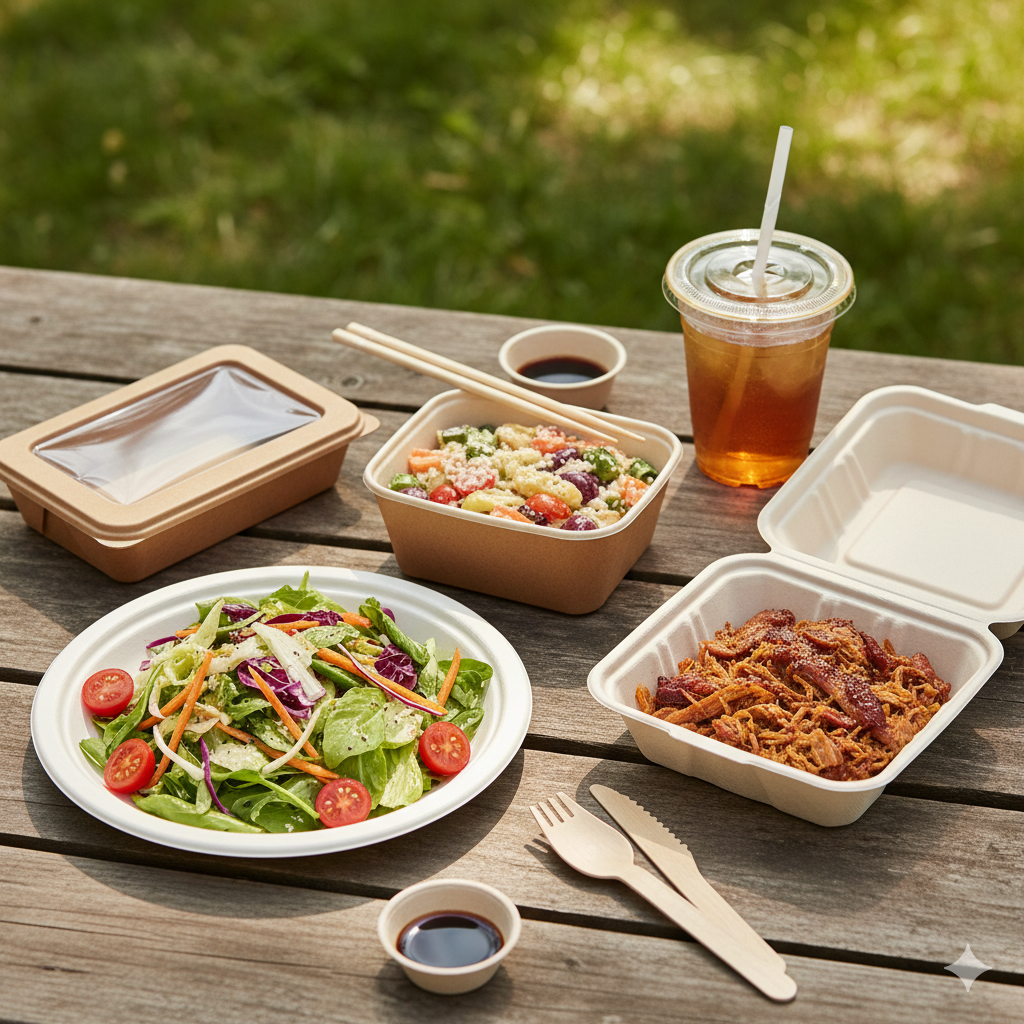
3. Biodegradable Food Containers
- Options for Takeout:
- Bagasse Clamshells: Perfect for hot meals, burgers, and entrees. They resist oil and heat up to 100∘C (Source: CSIR-NIIST).
- PLA-Lined Paper Containers: Ideal for cold salads or desserts where visibility is important.
Image & Infographic Ideas for High Engagement
A visual element is crucial for SEO and keeping readers engaged. Use professional, clear photography.
Suggested Image Idea: Product Comparison Photo
- Visual Concept: A split image showing an old, broken plastic fork next to a clean, elegant wooden spoon.
- Content for Infographic Overlay:
- Plastic Fork: Takes 1,000+ years to degrade. Made from Fossil Fuels. Contains BPA.
- Wooden Spoon: Degrades in months. Made from Renewable Wood. Non-toxic.
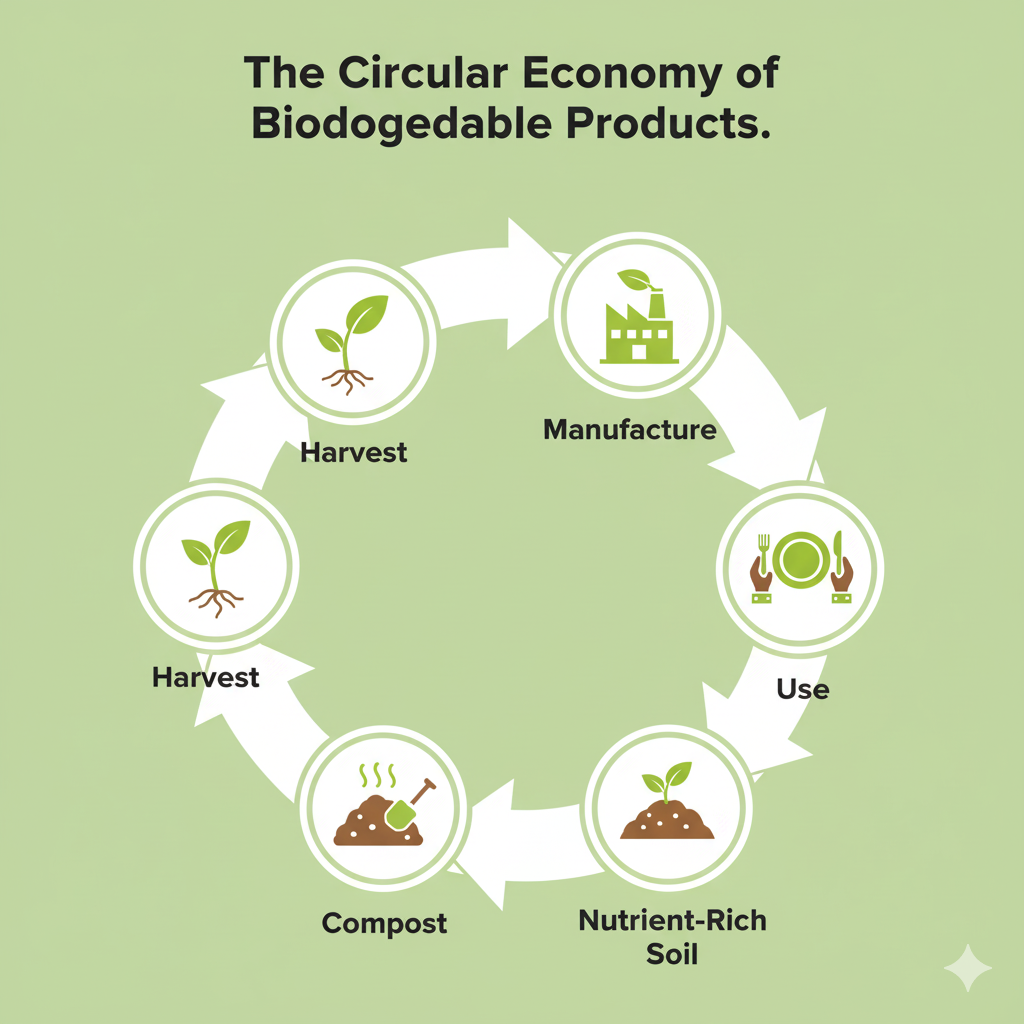
Suggested Infographic Idea: The Circular Economy
Frequently Asked Questions (FAQs)
Q: Is biodegradable the same as compostable? A: No, not always. All compostable items are biodegradable, but not all biodegradable items are compostable. “Compostable” means it will break down into useful compost under specific conditions (usually industrial).
Q: Do biodegradable containers cost more than plastic? A: Initially, they can be slightly pricier. However, as the market grows, costs are dropping, and the benefits of an improved eco-friendly brand image often outweigh the initial price difference.
Q: How do I dispose of these items properly? A: Check the product label. Wood and bamboo can often be home-composted. PLA and bagasse items usually require a commercial composting facility to break down completely.
Q: Are these materials safe for hot food and the microwave? A: Bagasse containers are excellent for hot food and are typically microwave-safe. PLA products should generally only be used for cold foods, as they have a lower melting point. Always check the manufacturer’s temperature rating.
About the Kalpita
Kalpita is a dedicated supplier committed to sustainability and high-quality eco-friendly solutions. We believe in practical steps toward a greener planet, offering businesses and consumers the best in biodegradable plates, cutlery, and food containers. Our mission is to make the switch from plastic easy, affordable, and impactful.