
1. India’s Bold Move: The Nationwide Plastic Ban
India is leading a vital global charge against plastic pollution. The days of single-use plastic (SUP) plates, cups, and cutlery are officially over, with a nationwide ban implemented on July 1, 2022 (Source: PIB, Ministry of Environment, Forest and Climate Change).
This isn’t just an environmental initiative; it’s a monumental shift for every business involved in food service. Compliance is no longer optional—it’s essential for survival and growth.
Fact Check: India grapples with over 3.4 million tonnes of plastic waste annually. The ban targets specific items to drastically reduce this environmental burden (Source: CPCB Report, via Chuk).
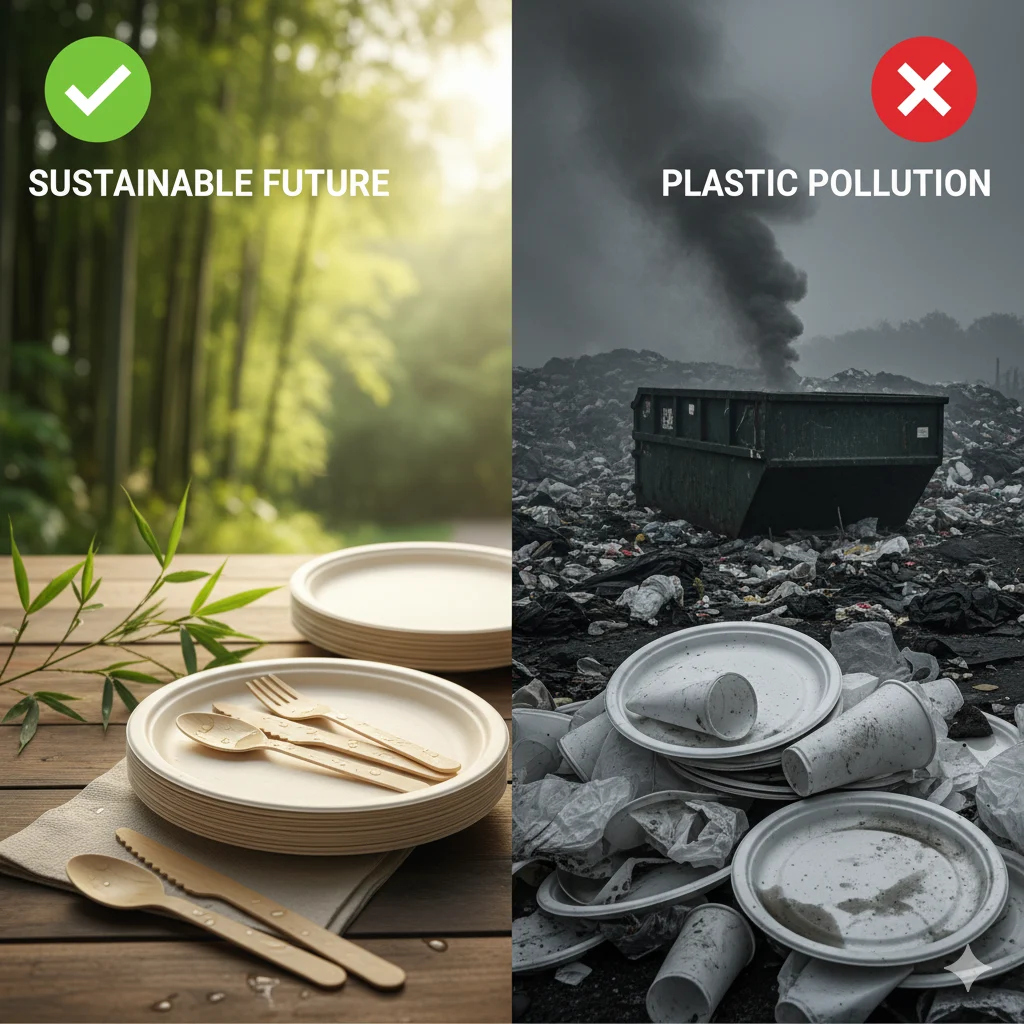
2. Why Wood & Bamboo Are Revolutionizing Disposable Tableware
In the wake of the plastic ban, materials like wood and bamboo have emerged as the leading eco-friendly alternatives. They combine natural origins with superior functionality.
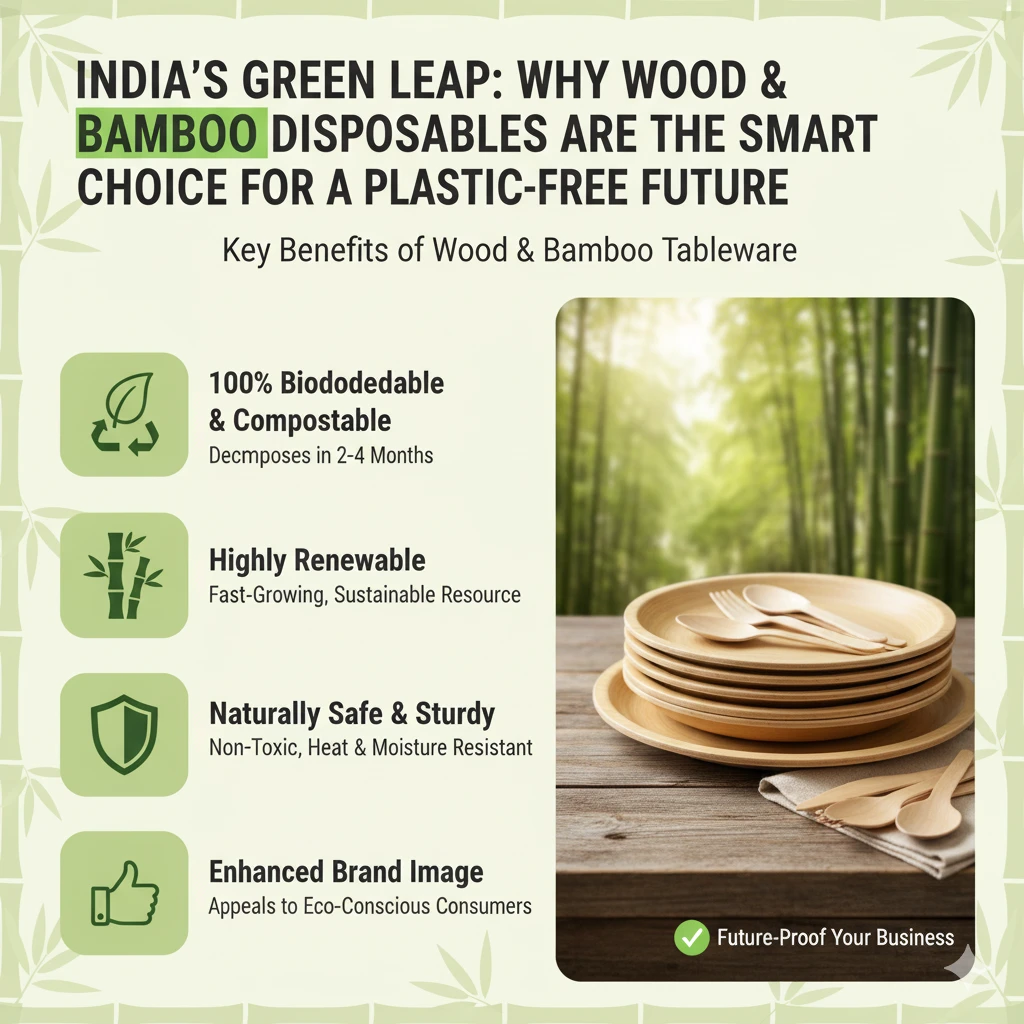
Key Benefits of Wood & Bamboo Tableware:
- 100% Biodegradable & Compostable: Unlike plastic, these materials return to nature. Bamboo, for instance, can decompose naturally in just 2-4 months (Source: Ancheng, bambu).
- Highly Renewable: Bamboo is one of the fastest-growing plants on Earth, replenishing itself quickly without depleting natural resources.
- Naturally Safe & Sturdy: They are chemical-free, non-toxic, and naturally resistant to heat and moisture. This means no soggy plates or harmful leaching into food.
- Enhanced Brand Image: Choosing sustainable options boosts your brand’s reputation, showing your commitment to the environment—something today’s consumers deeply value.
3. The Booming Market for Sustainable Disposables
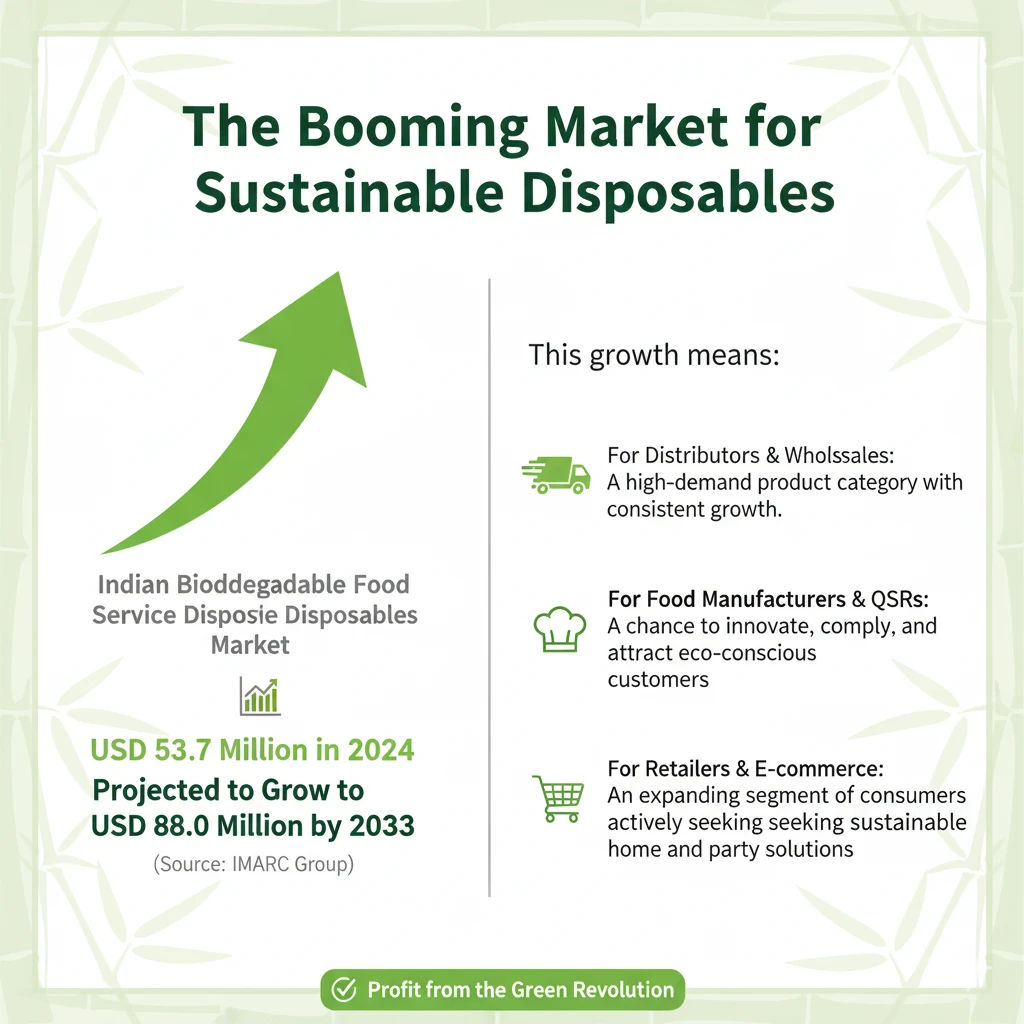
The shift isn’t just about compliance; it’s a massive market opportunity. The Indian biodegradable food service disposables market, valued at USD 53.7 Million in 2024, is projected to grow significantly to USD 88.0 Million by 2033 (Source: IMARC Group).
This growth means:*
- For Distributors & Wholesalers: A high-demand product category with consistent growth.
- For Food Manufacturers & QSRs: A chance to innovate, comply, and attract eco-conscious customers.
- For Retailers & E-commerce: An expanding segment of consumers actively seeking sustainable home and party solutions.
Frequently Asked Questions (FAQs)
Q1. Are biodegradable plates as sturdy as plastic? Absolutely! High-quality wood and bamboo plates are designed to be strong, durable, and resistant to liquids, making them ideal for all types of food without getting soggy.
Q2. Are they really affordable for mass use? While the initial cost might be slightly more than conventional plastic, the long-term benefits of brand reputation, regulatory compliance, and avoiding potential fines make them a cost-effective and responsible choice.
Q3. How do I identify truly compostable products? Look for certifications from recognized bodies that confirm compostability, often indicated by specific logos on the packaging. This ensures the product will break down harmlessly.
About Us Kalpita Udasi
Kalpita Udasi is at the forefront of India’s sustainable tableware revolution. With [1] years of expertise, we specialize in manufacturing premium, certified wood and bamboo disposable plates and cutlery. Our state-of-the-art factory ensures high-volume production and stringent quality control, serving a wide network of distributors, food businesses, and retailers nationwide.
Join us in building a greener, plastic-free India.