
The term “plastic” often brings up images of overflowing landfills and ocean pollution. But the landscape of polymer science is changing rapidly.
Scientists are creating innovative materials designed to reduce our reliance on fossil fuels and minimize long-term waste. These new materials are often grouped under the hopeful, but complex, umbrella of “earth-friendly plastics.”
It’s time to cut through the greenwashing and find out what really makes a plastic friendlier to the planet.
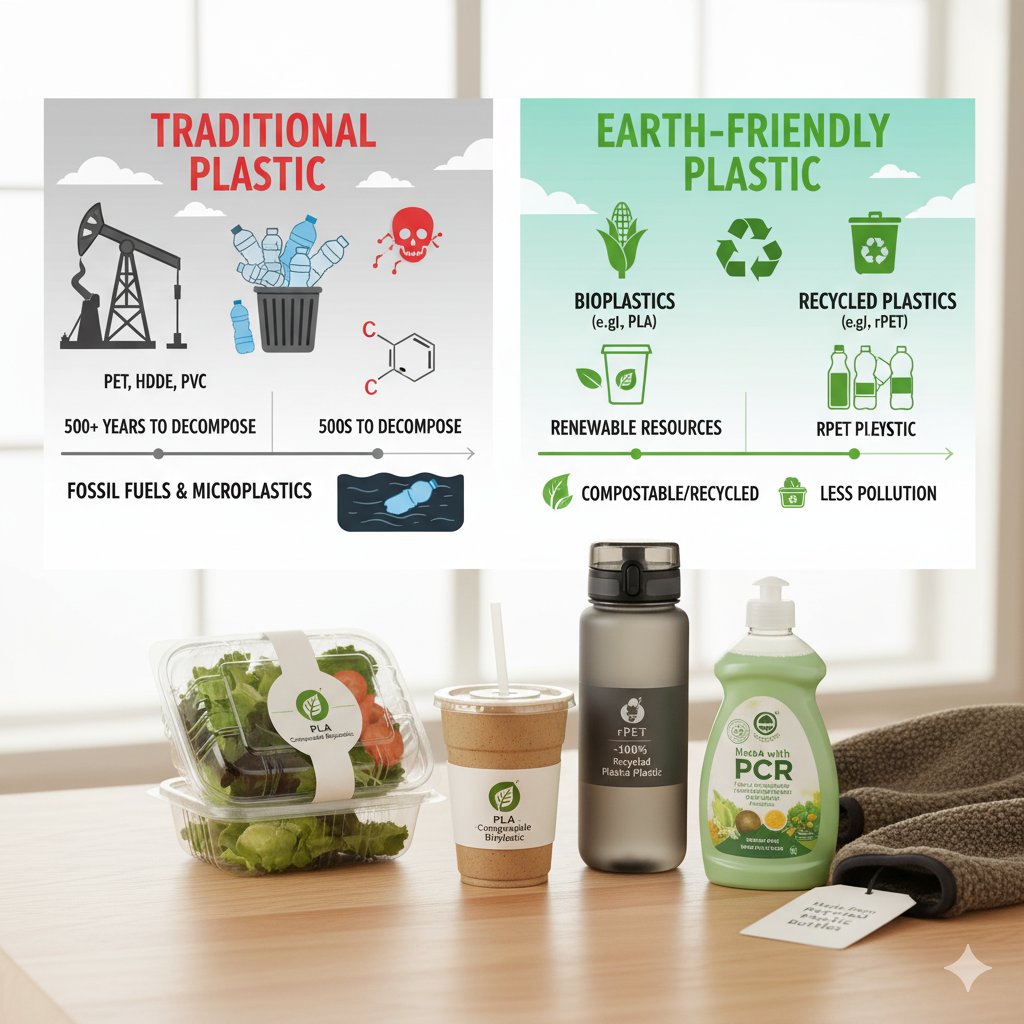
Why We Need Alternatives to Traditional Plastic
Traditional plastics (like PET, PVC, and HDPE) are derived from petroleum, a finite resource. Their persistence in the environment is the core issue.
- Fossil Fuel Dependency: Manufacturing virgin plastic consumes massive amounts of oil and gas.
- Decades-Long Persistence: Conventional plastics never fully disappear; they just break down into smaller and smaller pieces called microplastics.
- The Recycling Myth: Globally, only a small fraction of plastic is successfully recycled.
🌿 Category 1: Plastics from Renewable Resources (Bioplastics)
Bioplastics are materials made, at least partially, from biological sources like corn starch, sugarcane, cellulose, or vegetable oils, rather than petroleum. They often fall into two types:
1. PLA (Polylactic Acid)
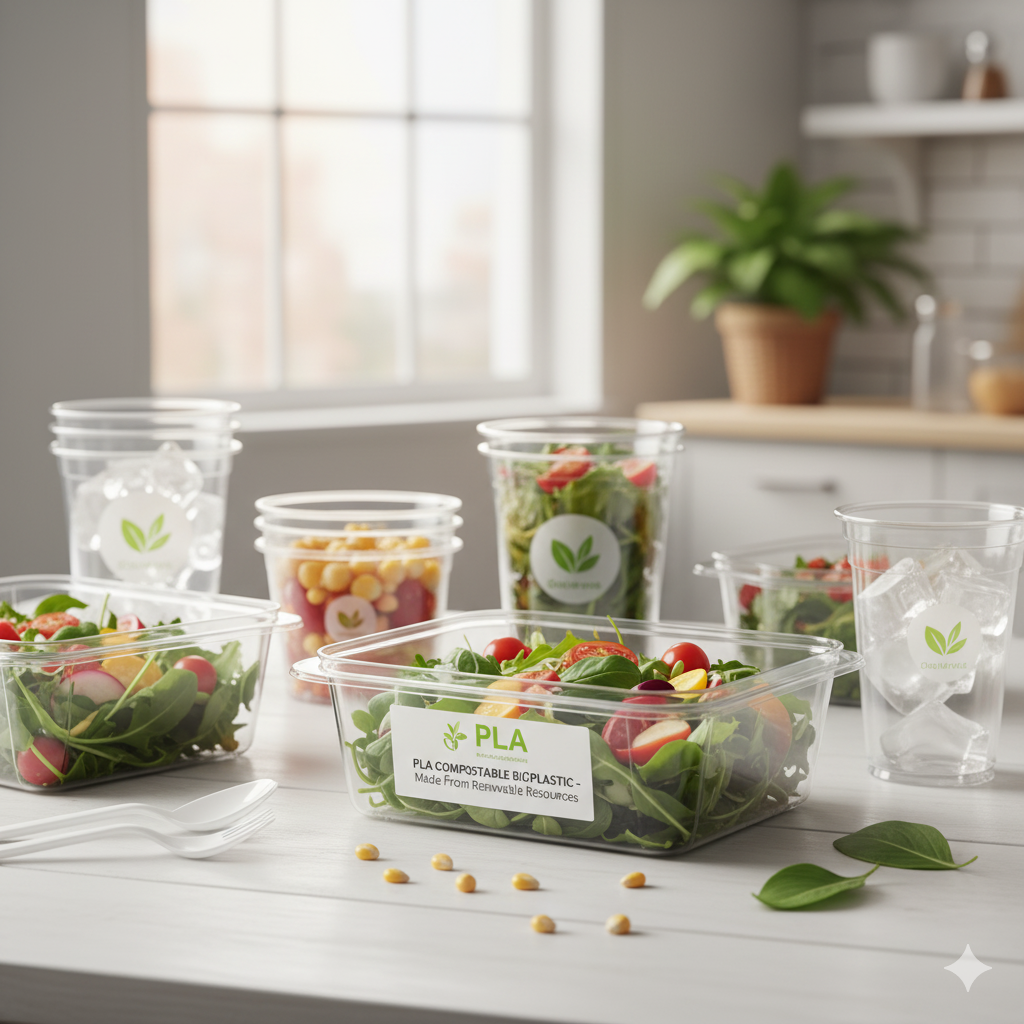
Often called “corn plastic,” PLA is a common bioplastic used for everything from food containers to 3D printing filament.
- Source: Derived from plant sugars (like corn starch).
- Environmental Benefit: It uses renewable resources instead of fossil fuels.
- The Catch: PLA is only truly compostable in specialized, high-heat industrial composting facilities. It will not break down in your home compost pile or a landfill.
- Best For: Single-use cold cups, salad containers, and clear packaging.
2. PHA (Polyhydroxyalkanoates)
PHA is gaining attention because it’s produced by bacteria that consume organic materials. It’s considered a true breakthrough.
- Source: Synthesized by bacteria.
- Environmental Benefit: This material is marine biodegradable, meaning it can break down in ocean water without needing high-heat facilities.
- Current Status: Still more expensive and less widely used than PLA, but expected to be a major solution for the future.
♻️ Category 2: Plastics from Recycled Waste (Recycled Polymers)
The most direct way to be “earth-friendly” is to use existing waste. This involves taking post-consumer plastics and turning them back into new products.
3. rPET (Recycled Polyethylene Terephthalate)
This is recycled plastic made from clear plastic bottles (like soda or water bottles).
- Source: Existing post-consumer PET plastic.
- Environmental Benefit: It drastically reduces the demand for virgin plastic and keeps waste out of landfills and oceans.
- Impact: Used widely for new food packaging, fabrics (recycled fleece), and clear containers.
4. Post-Consumer Recycled Content (PCR)
PCR refers to any finished plastic product made from recycled materials collected from households and commercial facilities.
- Benefit: Gives new life to otherwise discarded materials.
- Impact: Look for PCR in packaging for shampoo bottles, cleaning supplies, and non-food containers. The higher the PCR percentage, the better.
⚖️ Comparison: The “Friendliest” Choice
The most sustainable choice depends on the specific product and local infrastructure.
| Material Type | Raw Material Source | End-of-Life Solution | Environmental Trade-Off |
| PLA (Bioplastic) | Renewable (Corn, Sugarcane) | Industrial Composting | Requires specific facilities to break down. |
| rPET (Recycled) | Fossil Fuel (Existing Waste) | Recycling Loop (Circular) | Doesn’t use new fossil fuels, but limited recycling cycles. |
| Conventional Plastic | Fossil Fuel (Virgin Resource) | Landfill (Microplastics) | Least sustainable choice, long-term pollution. |
💡 Consumer Action: How to Make a Difference
You don’t need a PhD in chemistry to choose better plastics.
- Prioritize Reduce & Reuse: The most earth-friendly plastic is the one you don’t use. Always choose reusable options first (glass, steel, silicone).
- Look for PCR: When you must buy plastic, look for products that explicitly state a high percentage of PCR (Post-Consumer Recycled) content on the label.
- Support Local Infrastructure: Check your municipality’s rules. If they have industrial composting, you can safely use PLA products. If they have good recycling, prioritize rPET.
- Avoid False Claims: Be wary of terms like simply “degradable” or “environmentally friendly” without a clear certification (like industrial compostable).
❓ Frequently Asked Questions (FAQs)
Q: Can I recycle bioplastics (PLA) with regular plastic? A: No! PLA will contaminate traditional plastic recycling streams (like PET and HDPE). PLA requires specialized sorting, or it must go to industrial composting. Always check the label.
Q: Is glass better than recycled plastic? A: For reuse and long-term storage, yes, because glass is infinitely recyclable. For transport or single-use needs, rPET can be better due to its lightweight nature, which reduces shipping emissions.
Q: What is the main benefit of using PLA over traditional plastic? A: The main benefit is moving away from fossil fuels as the raw material source.
About the Author
Hi! I’m Kalpita , a consultant focused on the circular economy and sustainable material science. My goal is to decode complex environmental topics so you can confidently choose products that truly benefit the planet.